What Vitamin B1 Is Good For in Skin Regeneration and Mesotherapy
What Vitamin B1 Is Good For in Skin Regeneration and Mesotherapy
In skincare, we often focus on ingredients that directly affect how skin looks - hydration boosters, collagen stimulators, brightening agents.
But healthy skin regeneration begins deeper than that.
It begins inside the cell, where energy is produced.
If you search online for “what vitamin B1 good for,” you’ll usually read about fatigue or nerve health. What is discussed far less often is how this vitamin supports the metabolic machinery that allows cells to repair and regenerate.
That becomes particularly interesting when we look at professional treatments like microneedling or mesotherapy. These procedures stimulate the skin’s natural repair processes - and those processes require energy.
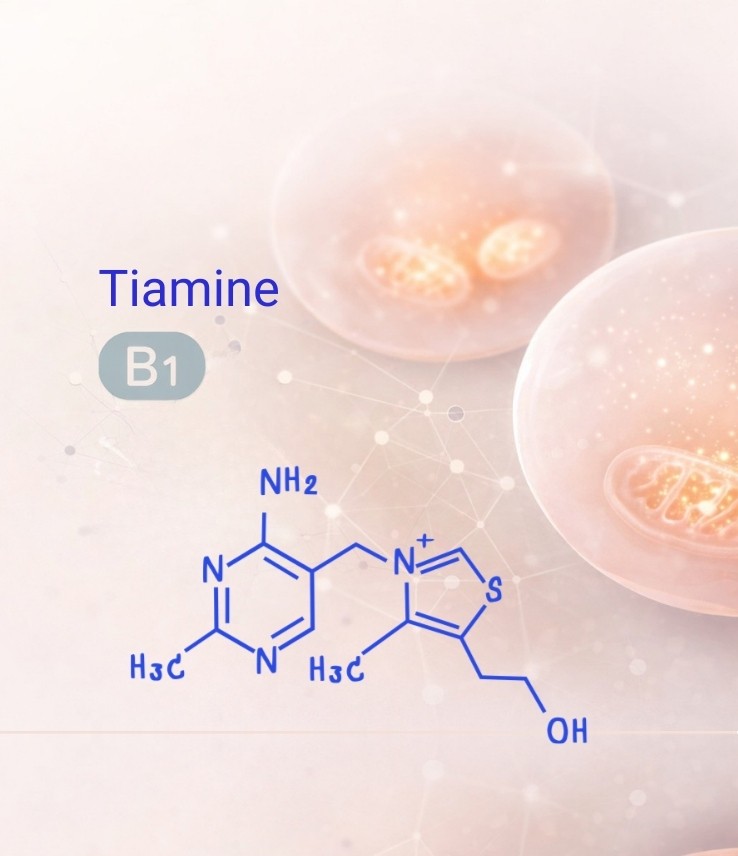
Vitamin B1, also known as thiamine, plays a key role in making that energy available.
To support readability, abbreviations used throughout this article are listed and explained at the end.
How Cellular Energy Production Supports Skin Regeneration
What role does Vitamin B1 play in cellular energy production?
Skin is constantly renewing itself. But after a procedure such as microneedling or a mesotherapy facial, the demand for repair increases significantly.
Cells need to:
• proliferate
• repair micro-injury
• produce collagen
• restore the skin barrier
• manage temporary oxidative stress
All of these processes require ATP, the cell’s primary energy molecule.
Vitamin B1 acts as a cofactor in key enzymes that enable glucose to enter mitochondrial energy metabolism, ultimately supporting ATP production¹,². Without sufficient thiamine, cellular energy production becomes less efficient.
And when energy supply is limited, regenerative processes slow down.
This offers one practical answer to the question many people ask: what is vitamin B1 good for?
It supports the metabolic processes that allow skin cells to repair and regenerate efficiently.
Why Skin Needs Metabolic Support After Microneedling and Mesotherapy
What role does Vitamin B1 play in skin recovery after mesotherapy?
Microneedling and mesotherapy treatments are designed to stimulate controlled regeneration. They trigger inflammatory signalling, activate fibroblasts, and initiate collagen remodeling.
This response is beneficial - but biologically demanding.
Thiamine plays a role in the pentose phosphate pathway¹, which generates NADPH, a molecule required for maintaining cellular antioxidant systems⁴.
In simpler terms:
• procedures increase metabolic demand
• oxidative signalling temporarily rises
• skin cells must respond quickly and proportionally
Supporting cellular energy production and redox balance during this phase may help the skin respond more efficiently to regenerative stimulation.
In our upgraded formulation of MESO Bellamine® gel (21 amino acids, hyaluronic acid & Vitamin B1 , thiamine is combined with structural amino acids and hyaluronic acid.
Each component contributes differently:
• amino acids provide substrates for protein synthesis, including the collagen and structural proteins involved in dermal repair
• hyaluronic acid supports hydration and extracellular matrix structure
• vitamin B1 supports mitochondrial energy metabolism
Skin regeneration is most effective when structural support and cellular metabolism work together.
What Happens When Vitamin B1 Levels Are Low?
Can Vitamin B1 deficiency affect skin repair and recovery?
Search interest around vitamin B1 deficiency and vitamin B1 deficiency symptoms remains consistently high.
Severe thiamine deficiency - historically known as beriberi - illustrates how essential this vitamin is for tissues with high energy demands¹.
Thiamine is required for efficient cellular energy metabolism. When availability is low, mitochondrial energy production becomes less efficient, and cells struggle to maintain normal repair processes.
Research shows that thiamine deficiency can increase oxidative stress and impair wound healing in experimental models⁴,⁷.
Cosmetic formulations are not intended to treat nutritional deficiencies. However, the same biological mechanisms help explain why supporting metabolic pathways may be relevant when skin enters periods of increased regenerative demand - for example after microneedling or mesotherapy treatments.
Efficient skin repair and regeneration ultimately depend on efficient cellular energy production.
Glucose Metabolism, Glycation and Collagen Integrity
How does glucose metabolism influence collagen stability in the skin?
Collagen quality is influenced by more than just how much of it we produce. The biochemical environment surrounding collagen fibers also plays an important role.
One process that can affect structural proteins is glycation - a reaction in which reactive glucose metabolites bind to proteins and form advanced glycation end products (AGEs).
AGEs can alter collagen structure, reducing its flexibility and contributing to visible skin aging⁵.
Thiamine-dependent enzymes involved in carbohydrate metabolism help regulate glucose processing within the cell³. By supporting efficient metabolic pathways, these enzymes help limit the accumulation of reactive intermediates involved in glycation processes.
Topical Vitamin B1 is not positioned as an anti-glycation treatment. However, maintaining balanced cellular metabolism contributes to a biochemical environment in which collagen structures are less exposed to metabolic stress.
From Biochemistry to Formulation
Formulation decisions in professional skincare should reflect biology.
In the upgraded version of MESO Bellamine® with 21 amino acids, HA and Vitamin B1, thiamine was included to complement structural and hydrating components during high-demand regenerative phases.
Microneedling temporarily enhances skin permeability and increases metabolic activity.
A water-soluble metabolic cofactor such as Vitamin B1 fits well within this context.
This is not about adding more ingredients.
It is about adding the right ones for the right biological moment.
Vitamin B1 Dosage for Adults - And Why Topical Use Is Different
One of the most searched queries is vitamin B1 dosage for adults.
Current recommendations suggest approximately¹:
• 1.2 mg daily for adult men
• 1.1 mg daily for adult women
Because thiamine is water-soluble and not extensively stored, consistent dietary intake is important.
Topical use during aesthetic procedures serves a different purpose. It does not replace nutrition but supports localized metabolic processes during regenerative stimulation.
Where Is Vitamin B1 Found?
Searches such as vitamin B1 foods and vitamin B1 sources remain common.
Dietary sources include¹:
• whole grains
• legumes
• nuts
• pork
• fortified cereals
Internal nutrition and topical formulation work together. One supports systemic metabolism; the other supports local cellular activity.
Are There Vitamin B1 Side Effects?
Another frequent question concerns vitamin B1 side effects.
Thiamine has a strong safety profile and low toxicity risk due to its water-soluble nature¹.
When properly formulated for topical use, it is generally well tolerated in professional aesthetic settings.
As always, product quality and practitioner expertise matter.
The Takeaway: Why Vitamin B1 Belongs in Regenerative Skincare
When people ask what Vitamin B1 is good for, the simplest answer is energy.
In skin biology, energy enables processes such as:
• efficient collagen synthesis
• restoration of the skin barrier
• controlled inflammatory responses
• balanced oxidative signalling
• regeneration following aesthetic treatments
Vitamin B1 may not be the most visible ingredient in a formulation.
But inside the cell, it plays a fundamental role in supporting the metabolic processes that allow skin to repair itself.
In professional procedures such as mesotherapy and microneedling - where regeneration is intentionally stimulated - supporting cellular metabolism can be just as important as triggering the stimulation itself.
References
Lonsdale D. Thiamine and magnesium deficiencies: keys to disease. Nutrients. 2014;6(11):491–516.
Bettendorff L, Wins P. Thiamine in excitable tissues: metabolism and regulatory roles. Neurochemistry International. 2013;62(5):511–520.
Thornalley PJ et al. High-dose thiamine therapy counteracts hyperglycemia-induced damage. Diabetes Care. 2007;30(10):2525–2531.
Tanaka T et al. Thiamine prevents oxidative stress-induced damage. Free Radical Biology & Medicine. 2007;42(3):388–396.
Birch-Machin MA, Bowman A. Oxidative stress and ageing in skin. Journal of Investigative Dermatology. 2016;136(4):e47–e52.
Spinas E et al. Thiamine and inflammatory regulation mechanisms. Inflammation Research. 2015;64(7):483–490.
Saito T et al. Effects of thiamine deficiency on wound healing in experimental models. Journal of Nutritional Science and Vitaminology. 1997;43(1):15–24.
List of Abbreviations
ATP – Adenosine Triphosphate; the primary energy molecule used by cells.
AGEs – Advanced Glycation End Products; compounds formed when proteins or lipids become glycated after exposure to sugars.
HA – Hyaluronic Acid; a glycosaminoglycan that supports hydration and extracellular matrix structure.
NADPH – Nicotinamide Adenine Dinucleotide Phosphate (reduced form); a coenzyme involved in antioxidant regeneration and redox balance.
ROS – Reactive Oxygen Species; chemically reactive molecules generated during metabolic processes and inflammatory signalling.
TPP – Thiamine Pyrophosphate; the biologically active coenzyme form of Vitamin B1.
In skincare, we often focus on ingredients that directly affect how skin looks - hydration boosters, collagen stimulators, brightening agents.
But healthy skin regeneration begins deeper than that.
It begins inside the cell, where energy is produced.
If you search online for “what vitamin B1 good for,” you’ll usually read about fatigue or nerve health. What is discussed far less often is how this vitamin supports the metabolic machinery that allows cells to repair and regenerate.
That becomes particularly interesting when we look at professional treatments like microneedling or mesotherapy. These procedures stimulate the skin’s natural repair processes - and those processes require energy.
Vitamin B1, also known as thiamine, plays a key role in making that energy available.
To support readability, abbreviations used throughout this article are listed and explained at the end.
How Cellular Energy Production Supports Skin Regeneration
What role does Vitamin B1 play in cellular energy production?
Skin is constantly renewing itself. But after a procedure such as microneedling or a mesotherapy facial, the demand for repair increases significantly.
Cells need to:
• proliferate
• repair micro-injury
• produce collagen
• restore the skin barrier
• manage temporary oxidative stress
All of these processes require ATP, the cell’s primary energy molecule.
Vitamin B1 acts as a cofactor in key enzymes that enable glucose to enter mitochondrial energy metabolism, ultimately supporting ATP production¹,². Without sufficient thiamine, cellular energy production becomes less efficient.
And when energy supply is limited, regenerative processes slow down.
This offers one practical answer to the question many people ask: what is vitamin B1 good for?
It supports the metabolic processes that allow skin cells to repair and regenerate efficiently.
Why Skin Needs Metabolic Support After Microneedling and Mesotherapy
What role does Vitamin B1 play in skin recovery after mesotherapy?
Microneedling and mesotherapy treatments are designed to stimulate controlled regeneration. They trigger inflammatory signalling, activate fibroblasts, and initiate collagen remodeling.
This response is beneficial - but biologically demanding.
Thiamine plays a role in the pentose phosphate pathway¹, which generates NADPH, a molecule required for maintaining cellular antioxidant systems⁴.
In simpler terms:
• procedures increase metabolic demand
• oxidative signalling temporarily rises
• skin cells must respond quickly and proportionally
Supporting cellular energy production and redox balance during this phase may help the skin respond more efficiently to regenerative stimulation.
In our upgraded formulation of MESO Bellamine® gel (21 amino acids, hyaluronic acid & Vitamin B1 , thiamine is combined with structural amino acids and hyaluronic acid.
Each component contributes differently:
• amino acids provide substrates for protein synthesis, including the collagen and structural proteins involved in dermal repair
• hyaluronic acid supports hydration and extracellular matrix structure
• vitamin B1 supports mitochondrial energy metabolism
Skin regeneration is most effective when structural support and cellular metabolism work together.
What Happens When Vitamin B1 Levels Are Low?
Can Vitamin B1 deficiency affect skin repair and recovery?
Search interest around vitamin B1 deficiency and vitamin B1 deficiency symptoms remains consistently high.
Severe thiamine deficiency - historically known as beriberi - illustrates how essential this vitamin is for tissues with high energy demands¹.
Thiamine is required for efficient cellular energy metabolism. When availability is low, mitochondrial energy production becomes less efficient, and cells struggle to maintain normal repair processes.
Research shows that thiamine deficiency can increase oxidative stress and impair wound healing in experimental models⁴,⁷.
Cosmetic formulations are not intended to treat nutritional deficiencies. However, the same biological mechanisms help explain why supporting metabolic pathways may be relevant when skin enters periods of increased regenerative demand - for example after microneedling or mesotherapy treatments.
Efficient skin repair and regeneration ultimately depend on efficient cellular energy production.
Glucose Metabolism, Glycation and Collagen Integrity
How does glucose metabolism influence collagen stability in the skin?
Collagen quality is influenced by more than just how much of it we produce. The biochemical environment surrounding collagen fibers also plays an important role.
One process that can affect structural proteins is glycation - a reaction in which reactive glucose metabolites bind to proteins and form advanced glycation end products (AGEs).
AGEs can alter collagen structure, reducing its flexibility and contributing to visible skin aging⁵.
Thiamine-dependent enzymes involved in carbohydrate metabolism help regulate glucose processing within the cell³. By supporting efficient metabolic pathways, these enzymes help limit the accumulation of reactive intermediates involved in glycation processes.
Topical Vitamin B1 is not positioned as an anti-glycation treatment. However, maintaining balanced cellular metabolism contributes to a biochemical environment in which collagen structures are less exposed to metabolic stress.
From Biochemistry to Formulation
Formulation decisions in professional skincare should reflect biology.
In the upgraded version of MESO Bellamine® with 21 amino acids, HA and Vitamin B1, thiamine was included to complement structural and hydrating components during high-demand regenerative phases.
Microneedling temporarily enhances skin permeability and increases metabolic activity.
A water-soluble metabolic cofactor such as Vitamin B1 fits well within this context.
This is not about adding more ingredients.
It is about adding the right ones for the right biological moment.
Vitamin B1 Dosage for Adults - And Why Topical Use Is Different
One of the most searched queries is vitamin B1 dosage for adults.
Current recommendations suggest approximately¹:
• 1.2 mg daily for adult men
• 1.1 mg daily for adult women
Because thiamine is water-soluble and not extensively stored, consistent dietary intake is important.
Topical use during aesthetic procedures serves a different purpose. It does not replace nutrition but supports localized metabolic processes during regenerative stimulation.
Where Is Vitamin B1 Found?
Searches such as vitamin B1 foods and vitamin B1 sources remain common.
Dietary sources include¹:
• whole grains
• legumes
• nuts
• pork
• fortified cereals
Internal nutrition and topical formulation work together. One supports systemic metabolism; the other supports local cellular activity.
Are There Vitamin B1 Side Effects?
Another frequent question concerns vitamin B1 side effects.
Thiamine has a strong safety profile and low toxicity risk due to its water-soluble nature¹.
When properly formulated for topical use, it is generally well tolerated in professional aesthetic settings.
As always, product quality and practitioner expertise matter.
The Takeaway: Why Vitamin B1 Belongs in Regenerative Skincare
When people ask what Vitamin B1 is good for, the simplest answer is energy.
In skin biology, energy enables processes such as:
• efficient collagen synthesis
• restoration of the skin barrier
• controlled inflammatory responses
• balanced oxidative signalling
• regeneration following aesthetic treatments
Vitamin B1 may not be the most visible ingredient in a formulation.
But inside the cell, it plays a fundamental role in supporting the metabolic processes that allow skin to repair itself.
In professional procedures such as mesotherapy and microneedling - where regeneration is intentionally stimulated - supporting cellular metabolism can be just as important as triggering the stimulation itself.
References
Lonsdale D. Thiamine and magnesium deficiencies: keys to disease. Nutrients. 2014;6(11):491–516.
Bettendorff L, Wins P. Thiamine in excitable tissues: metabolism and regulatory roles. Neurochemistry International. 2013;62(5):511–520.
Thornalley PJ et al. High-dose thiamine therapy counteracts hyperglycemia-induced damage. Diabetes Care. 2007;30(10):2525–2531.
Tanaka T et al. Thiamine prevents oxidative stress-induced damage. Free Radical Biology & Medicine. 2007;42(3):388–396.
Birch-Machin MA, Bowman A. Oxidative stress and ageing in skin. Journal of Investigative Dermatology. 2016;136(4):e47–e52.
Spinas E et al. Thiamine and inflammatory regulation mechanisms. Inflammation Research. 2015;64(7):483–490.
Saito T et al. Effects of thiamine deficiency on wound healing in experimental models. Journal of Nutritional Science and Vitaminology. 1997;43(1):15–24.
List of Abbreviations
ATP – Adenosine Triphosphate; the primary energy molecule used by cells.
AGEs – Advanced Glycation End Products; compounds formed when proteins or lipids become glycated after exposure to sugars.
HA – Hyaluronic Acid; a glycosaminoglycan that supports hydration and extracellular matrix structure.
NADPH – Nicotinamide Adenine Dinucleotide Phosphate (reduced form); a coenzyme involved in antioxidant regeneration and redox balance.
ROS – Reactive Oxygen Species; chemically reactive molecules generated during metabolic processes and inflammatory signalling.
TPP – Thiamine Pyrophosphate; the biologically active coenzyme form of Vitamin B1.