Amino Acids Formula for Youthful Skin
Amino Acids Formula for Youthful Skin
Ever wondered why some skincare products give temporary glow while others truly improve skin elasticity over time? The answer isn’t just fancy marketing - it’s in the molecular building blocks your skin actually uses: amino acids. Understanding these tiny molecules can transform how you choose and evaluate skincare.
How L-Amino Acids Boost Collagen & Repair
1. More Than Just an Ingredient List
In aesthetic medicine, ingredient lists are often scanned - but rarely understood. Terms like L-Proline or L-Lysine may look technical, even interchangeable, yet they reflect a critical biochemical detail that directly influences how the skin responds to treatment.
For patients, this can mean the difference between short-term hydration and meaningful skin improvement.
For practitioners, it defines whether a formulation truly aligns with skin physiology.
Understanding what the “L-” stands for is not just chemistry - it is a key to understanding how and why a treatment works.
2. What Does “L-” Actually Mean?
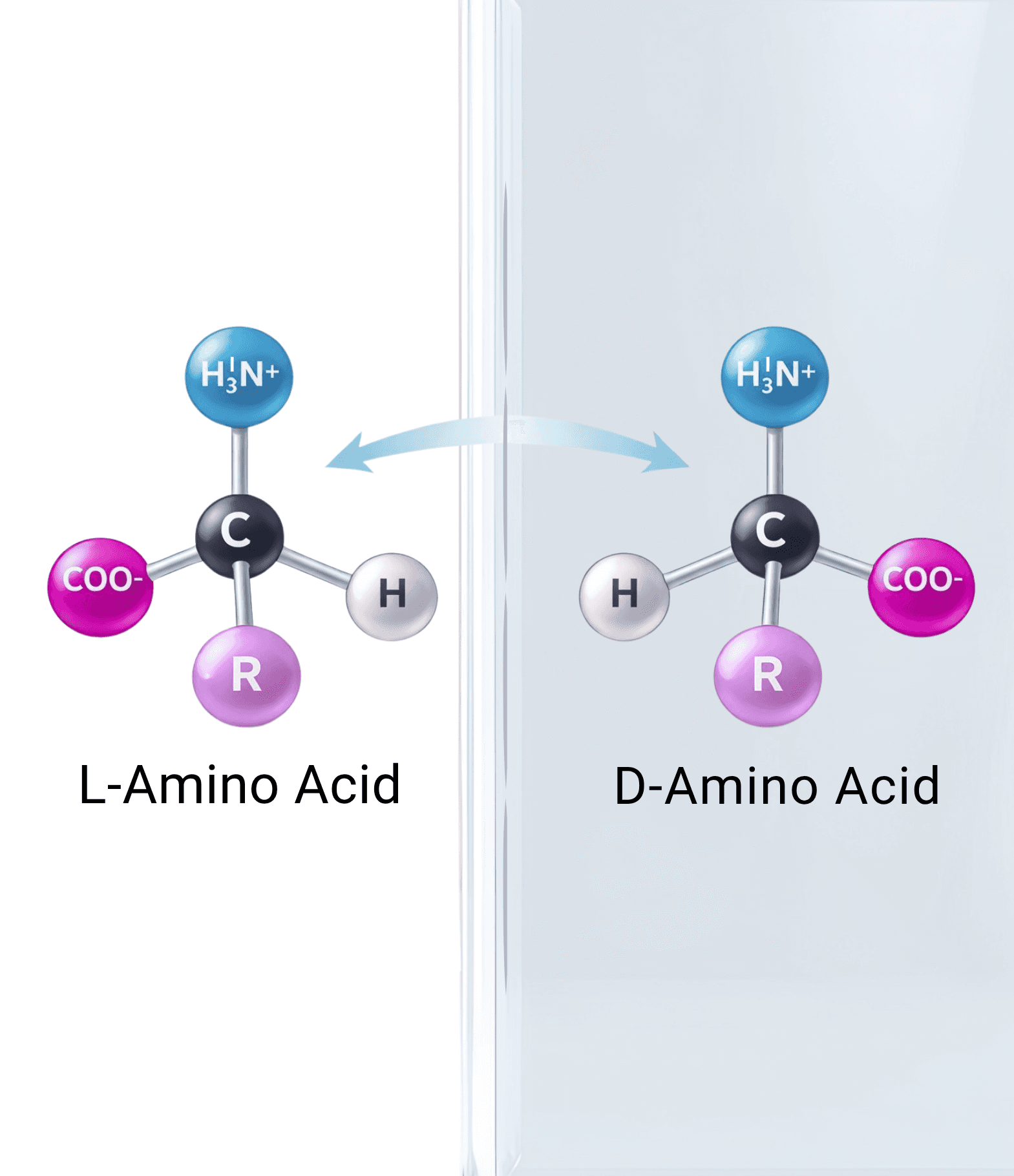
Amino acids - the building blocks of proteins - exist in two mirror-image forms: L- and D- configurations. These are known as stereoisomers: molecules that share the same chemical structure but differ in their three-dimensional arrangement. Think of L- and D- amino acids like left- and right-handed gloves. Only the left-hand glove (L-form) fits into your body’s ‘protein machinery.’ Using the wrong hand just won’t work, no matter how similar it looks.
The designation “L-” refers to the spatial orientation of the molecule relative to a reference compound called glyceraldehyde, a standard used in biochemistry.
While this may sound abstract, its biological relevance is very concrete:
Human proteins are built almost exclusively from L-amino acids.
This means that:
Cells recognize and utilize L-forms in processes such as collagen and elastin synthesis
D-forms are not typically incorporated into human proteins
Skin regeneration, repair, and structural integrity depend on biologically compatible amino acids
In practical terms, the “L-” is not a label - it is an indicator that the ingredient is aligned with human biology.
3. Why Some Ingredients Don’t Have “L-”
Not all ingredients follow the same naming approach, which can create confusion when reviewing formulations.
There are three common reasons:
No L/D form exists
Some molecules, such as glycine, are structurally symmetrical and therefore do not have L- or D- variants.Different chemical category
Compounds like taurine are not standard amino acids (they are amino sulfonic acids), so the L/D classification does not apply.Biological derivatives
Certain molecules, such as hydroxyproline, are formed naturally in the body from other amino acids and are not directly encoded in proteins.
These compounds still play important roles in skin function - particularly in hydration, antioxidant defense, and collagen stability - but they fall outside the classical stereochemical classification system.
4. Applying “L-” Science to MESO Bellamine®
When it comes to turning biochemical principles into effective skin treatments, MESO Bellamine® is a clear example of science in action. This formulation combines 21 amino acids - mostly in their L-forms - alongside hyaluronic acid and Vitamin B1 to support the skin on multiple levels.
Why does this matter? Because the L-form ensures that the amino acids are biologically recognized and efficiently used by the skin’s own cellular machinery. L-Proline, L-Lysine, and Glycine serve as the building blocks for collagen, reinforcing the skin’s structural integrity. At the same time, amino acids like L-Serine and L-Alanine, together with hyaluronic acid, help retain moisture and strengthen the skin barrier.
MESO Bellamine® also supports cellular energy and repair, thanks to L-Arginine and Vitamin B1, which promote microcirculation and energize the metabolic processes critical for tissue renewal. In short, the formulation isn’t just a mix of ingredients - it’s a science-driven combination designed to work in harmony with the skin.
5. How Each Ingredient Supports Skin Health
Comprehensive Amino Acid Benefits in MESO Bellamine®
Understanding why a formulation works comes down to the role of each component. While it’s tempting to focus only on collagen-boosting amino acids, the full spectrum of ingredients in MESO Bellamine® is designed to address structural, functional, and protective needs of the skin.
L-Histidine
Essential for tissue repair and wound healing
Acts as a precursor for histamine, supporting local immune response
Functions as a metal ion chelator and antioxidant, protecting skin cells from oxidative stress
L-Isoleucine
Branched-chain amino acid supporting protein synthesis in skin cells
Contributes to tissue maintenance and repair
Plays a role in nitrogen balance and cellular energy production
L-Leucine
Branched-chain amino acid critical for protein synthesis and cell regeneration
Stimulates mTOR signaling, enhancing dermal and epidermal protein production
Supports tissue repair and metabolic activity in skin
L-Lysine Hydrochloride
Required for collagen cross-linking, stabilizing collagen fibers
Supports elastin formation and structural integrity of connective tissue
Enhances wound healing and reduces risk of scarring
L-Methionine
Sulfur-containing amino acid critical for synthesis of cysteine and glutathione
Provides antioxidant defense, protecting against free-radical damage
Supports keratin and collagen production, maintaining structural integrity
L-Phenylalanine
Precursor to L-Tyrosine, essential for melanin production
Supports pigmentation regulation and photoprotection
Contributes to neurotransmitter synthesis, indirectly affecting skin homeostasis
L-Threonine
Supports collagen and elastin synthesis, maintaining dermal structure
Contributes to mucin and glycoprotein production, supporting skin barrier function
Plays a role in hydration via contribution to the Natural Moisturizing Factor (NMF)
L-Tryptophan
Precursor to serotonin and niacin (vitamin B3), influencing skin barrier and inflammation
Supports cell signaling and repair processes
Contributes to overall protein metabolism and tissue maintenance
L-Valine
Branched-chain amino acid involved in protein synthesis and tissue repair
Supports skin metabolic activity and cellular proliferation
Helps maintain nitrogen balance for optimal protein turnover
L-Arginine
Precursor to nitric oxide, enhancing microcirculation and nutrient delivery
Supports collagen deposition and tissue repair
Promotes skin barrier integrity and wound healing
L-Glutamine
Primary fuel source for rapidly dividing cells, including keratinocytes
Supports protein synthesis and skin barrier repair
Enhances cellular resilience and recovery under stress
L-Proline
Major component of collagen, crucial for triple-helix structure
Supports dermal elasticity, firmness, and tissue regeneration
Enhances wound healing and connective tissue maintenance
L-Cystine
Dimer of cysteine, contributing to keratin structure in skin, hair, and nails
Supports antioxidant defense via glutathione synthesis
Stabilizes protein structure, including collagen and elastin
Trans-4-Hydroxy-L-Proline
Hydroxylated form of proline, essential for collagen triple-helix stabilization
Enhances dermal strength, structural integrity, and tissue regeneration
Supports long-term maintenance of skin elasticity
Glycine
Smallest amino acid, critical for collagen triple-helix formation
Forms approximately one-third of collagen amino acids, ensuring proper fiber alignment
Supports dermal strength, elasticity, repair, and antioxidant defense
L-Alanine
Contributes to the Natural Moisturizing Factor (NMF), maintaining skin hydration
Supports protein synthesis and barrier function
Protects against transepidermal water loss
L-Aspartic Acid
Participates in amino acid metabolism and energy production in cells
Supports tissue repair and regeneration
Functions as a precursor for other amino acids and metabolic intermediates
L-Glutamic Acid
Component of NMF, critical for hydration and barrier function
Involved in protein synthesis and cellular detoxification
Supports cellular metabolism and skin resilience
L-Serine
Hydrophilic amino acid in NMF, maintaining moisture content
Supports barrier integrity and protein synthesis in the epidermis
Contributes to skin flexibility and resilience
L-Tyrosine
Precursor for melanin, essential for pigmentation regulation
Supports photoprotection and antioxidant activity
Plays a role in neurotransmitter production, indirectly affecting skin homeostasis
Taurine
Organic osmolyte regulating intracellular hydration and volume
Protects against oxidative stress
Supports tissue homeostasis and cellular metabolism
Key Active Ingredient
Hyaluronic Acid
Core bioactive for hydration and dermal volume
Maintains extracellular matrix structure and elasticity
Enhances tissue environment for amino acid incorporation and collagen synthesis
Functional Ingredients
Sorbitol - Humectant and osmolyte, helps maintain hydration and formulation stability
Vitamin B1 (Thiamine)
Cofactor in cellular energy metabolism (ATP production)
Supports repair, regeneration, and protein synthesis
Enhances collagen formation and cellular resilience
Key Takeaways:
Every amino acid contributes specific structural, functional, or protective roles.
Using L-forms ensures direct bioavailability and incorporation into human proteins.
Combined with hyaluronic acid and Vitamin B1, MESO Bellamine® supports collagen, elastin, barrier function, hydration, repair, and overall skin resilience.
8. References
Nelson DL, Cox MM. Lehninger Principles of Biochemistry
Berg JM et al. Biochemistry (9th Edition)
National Center for Biotechnology Information - Amino Acids
IUPAC - Stereochemical nomenclature
Ever wondered why some skincare products give temporary glow while others truly improve skin elasticity over time? The answer isn’t just fancy marketing - it’s in the molecular building blocks your skin actually uses: amino acids. Understanding these tiny molecules can transform how you choose and evaluate skincare.
How L-Amino Acids Boost Collagen & Repair
1. More Than Just an Ingredient List
In aesthetic medicine, ingredient lists are often scanned - but rarely understood. Terms like L-Proline or L-Lysine may look technical, even interchangeable, yet they reflect a critical biochemical detail that directly influences how the skin responds to treatment.
For patients, this can mean the difference between short-term hydration and meaningful skin improvement.
For practitioners, it defines whether a formulation truly aligns with skin physiology.
Understanding what the “L-” stands for is not just chemistry - it is a key to understanding how and why a treatment works.
2. What Does “L-” Actually Mean?
Amino acids - the building blocks of proteins - exist in two mirror-image forms: L- and D- configurations. These are known as stereoisomers: molecules that share the same chemical structure but differ in their three-dimensional arrangement. Think of L- and D- amino acids like left- and right-handed gloves. Only the left-hand glove (L-form) fits into your body’s ‘protein machinery.’ Using the wrong hand just won’t work, no matter how similar it looks.
The designation “L-” refers to the spatial orientation of the molecule relative to a reference compound called glyceraldehyde, a standard used in biochemistry.
While this may sound abstract, its biological relevance is very concrete:
Human proteins are built almost exclusively from L-amino acids.
This means that:
Cells recognize and utilize L-forms in processes such as collagen and elastin synthesis
D-forms are not typically incorporated into human proteins
Skin regeneration, repair, and structural integrity depend on biologically compatible amino acids
In practical terms, the “L-” is not a label - it is an indicator that the ingredient is aligned with human biology.
3. Why Some Ingredients Don’t Have “L-”
Not all ingredients follow the same naming approach, which can create confusion when reviewing formulations.
There are three common reasons:
No L/D form exists
Some molecules, such as glycine, are structurally symmetrical and therefore do not have L- or D- variants.Different chemical category
Compounds like taurine are not standard amino acids (they are amino sulfonic acids), so the L/D classification does not apply.Biological derivatives
Certain molecules, such as hydroxyproline, are formed naturally in the body from other amino acids and are not directly encoded in proteins.
These compounds still play important roles in skin function - particularly in hydration, antioxidant defense, and collagen stability - but they fall outside the classical stereochemical classification system.
4. Applying “L-” Science to MESO Bellamine®
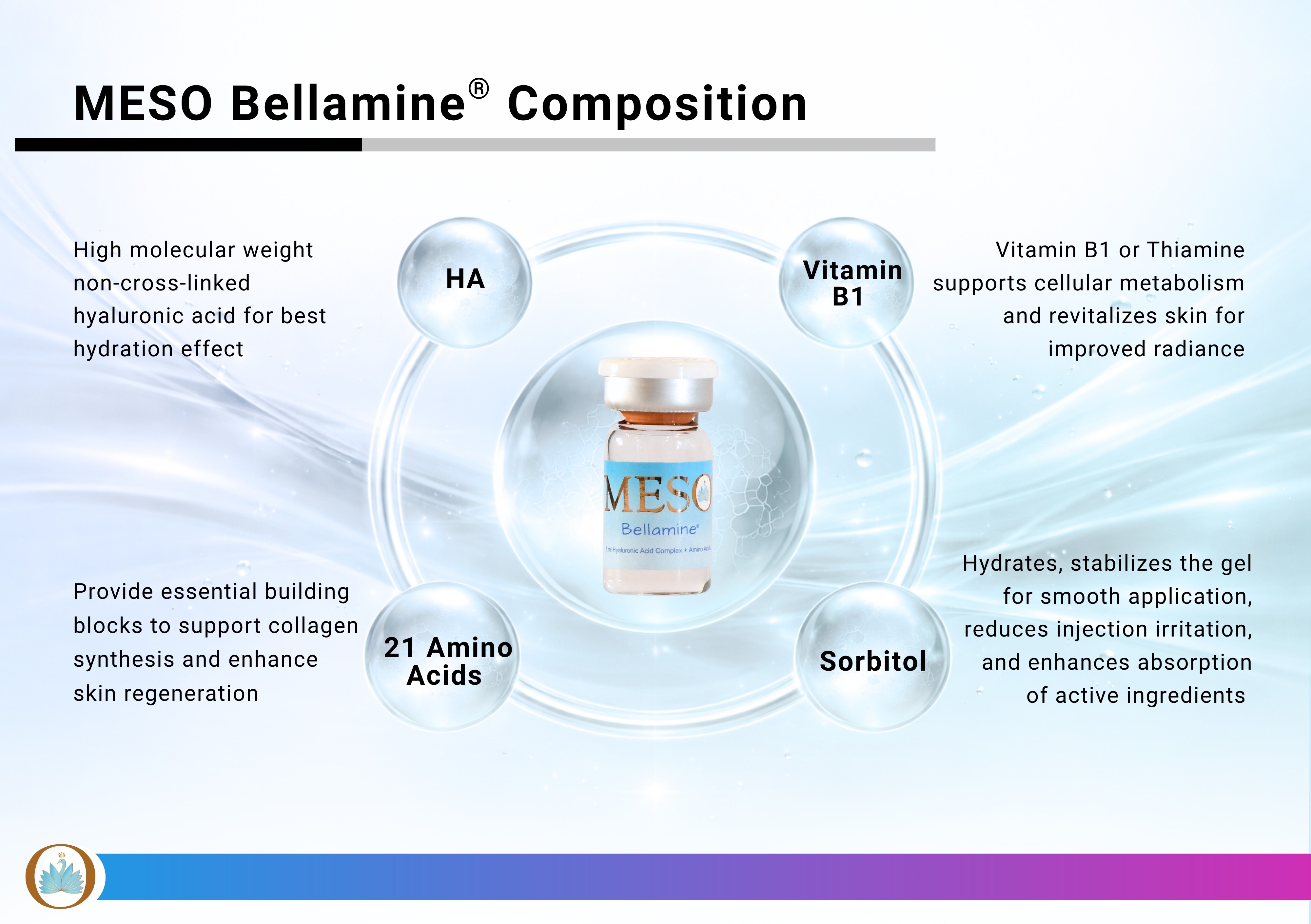
When it comes to turning biochemical principles into effective skin treatments, MESO Bellamine® is a clear example of science in action. This formulation combines 21 amino acids - mostly in their L-forms - alongside hyaluronic acid and Vitamin B1 to support the skin on multiple levels.
Why does this matter? Because the L-form ensures that the amino acids are biologically recognized and efficiently used by the skin’s own cellular machinery. L-Proline, L-Lysine, and Glycine serve as the building blocks for collagen, reinforcing the skin’s structural integrity. At the same time, amino acids like L-Serine and L-Alanine, together with hyaluronic acid, help retain moisture and strengthen the skin barrier.
MESO Bellamine® also supports cellular energy and repair, thanks to L-Arginine and Vitamin B1, which promote microcirculation and energize the metabolic processes critical for tissue renewal. In short, the formulation isn’t just a mix of ingredients - it’s a science-driven combination designed to work in harmony with the skin.
5. How Each Ingredient Supports Skin Health
Comprehensive Amino Acid Benefits in MESO Bellamine®
Understanding why a formulation works comes down to the role of each component. While it’s tempting to focus only on collagen-boosting amino acids, the full spectrum of ingredients in MESO Bellamine® is designed to address structural, functional, and protective needs of the skin.
L-Histidine
Essential for tissue repair and wound healing
Acts as a precursor for histamine, supporting local immune response
Functions as a metal ion chelator and antioxidant, protecting skin cells from oxidative stress
L-Isoleucine
Branched-chain amino acid supporting protein synthesis in skin cells
Contributes to tissue maintenance and repair
Plays a role in nitrogen balance and cellular energy production
L-Leucine
Branched-chain amino acid critical for protein synthesis and cell regeneration
Stimulates mTOR signaling, enhancing dermal and epidermal protein production
Supports tissue repair and metabolic activity in skin
L-Lysine Hydrochloride
Required for collagen cross-linking, stabilizing collagen fibers
Supports elastin formation and structural integrity of connective tissue
Enhances wound healing and reduces risk of scarring
L-Methionine
Sulfur-containing amino acid critical for synthesis of cysteine and glutathione
Provides antioxidant defense, protecting against free-radical damage
Supports keratin and collagen production, maintaining structural integrity
L-Phenylalanine
Precursor to L-Tyrosine, essential for melanin production
Supports pigmentation regulation and photoprotection
Contributes to neurotransmitter synthesis, indirectly affecting skin homeostasis
L-Threonine
Supports collagen and elastin synthesis, maintaining dermal structure
Contributes to mucin and glycoprotein production, supporting skin barrier function
Plays a role in hydration via contribution to the Natural Moisturizing Factor (NMF)
L-Tryptophan
Precursor to serotonin and niacin (vitamin B3), influencing skin barrier and inflammation
Supports cell signaling and repair processes
Contributes to overall protein metabolism and tissue maintenance
L-Valine
Branched-chain amino acid involved in protein synthesis and tissue repair
Supports skin metabolic activity and cellular proliferation
Helps maintain nitrogen balance for optimal protein turnover
L-Arginine
Precursor to nitric oxide, enhancing microcirculation and nutrient delivery
Supports collagen deposition and tissue repair
Promotes skin barrier integrity and wound healing
L-Glutamine
Primary fuel source for rapidly dividing cells, including keratinocytes
Supports protein synthesis and skin barrier repair
Enhances cellular resilience and recovery under stress
L-Proline
Major component of collagen, crucial for triple-helix structure
Supports dermal elasticity, firmness, and tissue regeneration
Enhances wound healing and connective tissue maintenance
L-Cystine
Dimer of cysteine, contributing to keratin structure in skin, hair, and nails
Supports antioxidant defense via glutathione synthesis
Stabilizes protein structure, including collagen and elastin
Trans-4-Hydroxy-L-Proline
Hydroxylated form of proline, essential for collagen triple-helix stabilization
Enhances dermal strength, structural integrity, and tissue regeneration
Supports long-term maintenance of skin elasticity
Glycine
Smallest amino acid, critical for collagen triple-helix formation
Forms approximately one-third of collagen amino acids, ensuring proper fiber alignment
Supports dermal strength, elasticity, repair, and antioxidant defense
L-Alanine
Contributes to the Natural Moisturizing Factor (NMF), maintaining skin hydration
Supports protein synthesis and barrier function
Protects against transepidermal water loss
L-Aspartic Acid
Participates in amino acid metabolism and energy production in cells
Supports tissue repair and regeneration
Functions as a precursor for other amino acids and metabolic intermediates
L-Glutamic Acid
Component of NMF, critical for hydration and barrier function
Involved in protein synthesis and cellular detoxification
Supports cellular metabolism and skin resilience
L-Serine
Hydrophilic amino acid in NMF, maintaining moisture content
Supports barrier integrity and protein synthesis in the epidermis
Contributes to skin flexibility and resilience
L-Tyrosine
Precursor for melanin, essential for pigmentation regulation
Supports photoprotection and antioxidant activity
Plays a role in neurotransmitter production, indirectly affecting skin homeostasis
Taurine
Organic osmolyte regulating intracellular hydration and volume
Protects against oxidative stress
Supports tissue homeostasis and cellular metabolism
Key Active Ingredient
Hyaluronic Acid
Core bioactive for hydration and dermal volume
Maintains extracellular matrix structure and elasticity
Enhances tissue environment for amino acid incorporation and collagen synthesis
Functional Ingredients
Sorbitol - Humectant and osmolyte, helps maintain hydration and formulation stability
Vitamin B1 (Thiamine)
Cofactor in cellular energy metabolism (ATP production)
Supports repair, regeneration, and protein synthesis
Enhances collagen formation and cellular resilience
Key Takeaways:
Every amino acid contributes specific structural, functional, or protective roles.
Using L-forms ensures direct bioavailability and incorporation into human proteins.
Combined with hyaluronic acid and Vitamin B1, MESO Bellamine® supports collagen, elastin, barrier function, hydration, repair, and overall skin resilience.
8. References
Nelson DL, Cox MM. Lehninger Principles of Biochemistry
Berg JM et al. Biochemistry (9th Edition)
National Center for Biotechnology Information - Amino Acids
IUPAC - Stereochemical nomenclature